


Listen, Queen: if you’ve ever looked in the mirror and wondered why those stubborn dark spots are crashing the party on your gorgeous face, you are not alone. Whether it’s a lingering reminder of a breakout from three months ago or a mysterious "mask" of pigment that appeared after a sunny vacation, hyperpigmentation is a common chapter in our skin’s story.
But here’s the thing: at IKNOW Skincare, we don’t do "anti-aging." We do pro-aging. We believe your skin is a map of your experiences, and while we celebrate every line and curve, we also believe in giving your melanin-rich skin the tools to look its most vibrant and resilient.
To treat your skin right, you first have to know what you’re dealing with. In the world of melanin, two culprits usually take center stage: Post-Inflammatory Hyperpigmentation (PIH) and Melasma. Understanding the difference is the first step in your quest for complexion perfection.
Let’s break it down in under three minutes.
The Identity Crisis: PIH vs. Melasma
If your skin were a stage, PIH and Melasma would be two very different performers. They might look similar from the back row, but their "why" and "how" are worlds apart.
What is PIH?
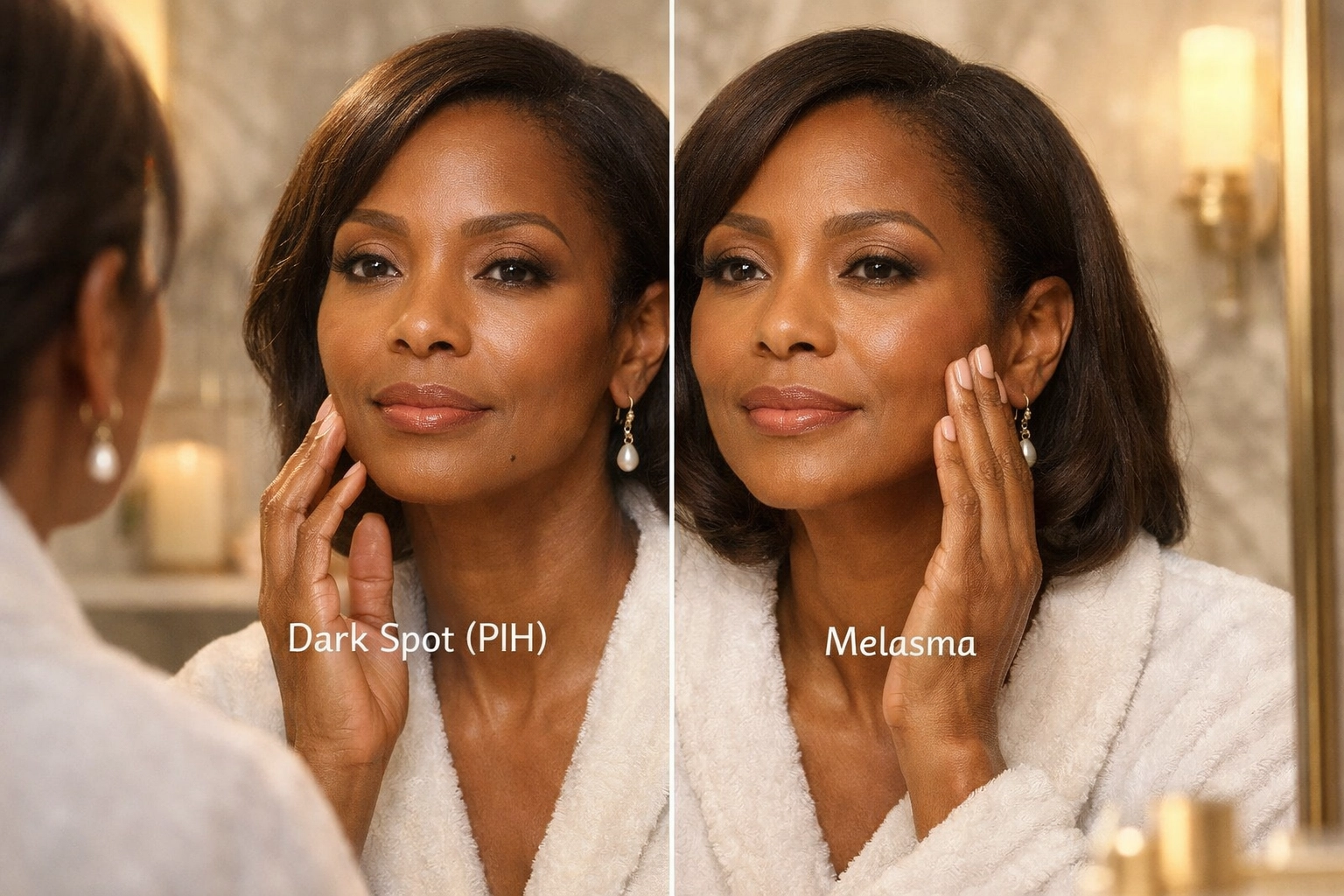
Post-Inflammatory Hyperpigmentation (PIH) is essentially your skin’s way of overreacting to an injury. Think of it as a "melanin footprint." According to the American Academy of Dermatology (AAD), PIH occurs when an inflammatory event: like acne, a bug bite, a scratch, or even a harsh chemical peel: triggers your melanocytes to go into overdrive.
As the skin heals, it leaves behind a flat spot that ranges from tan to dark brown or even purplish-black. These spots are usually found exactly where the original trauma happened. If you popped a pimple on your chin (we’ve all been there!), that dark spot left behind is PIH.
What is Melasma?
Melasma is a bit more complex. Often called the "mask of pregnancy," it’s frequently triggered by hormonal shifts. While PIH is a response to physical trauma, Melasma is a response to internal changes combined with external heat and light.
It typically appears as larger, blotchy patches with soft, irregular borders. The real giveaway? Melasma is almost always symmetrical. If you have a patch on your right cheek, you’ll likely see a matching one on the left. It loves the forehead, the bridge of the nose, and the upper lip.
The "Glass Test" and Other Clues
Not sure which one you’re looking at? Try the glass test. Press a clear glass against the spot for a few seconds. If the color disappears momentarily and then returns, you might be looking at redness (PIE). If the color stays exactly the same, it’s melanin-based, likely PIH or Melasma.
- PIH: Random locations, follows the shape of the injury, usually fades faster with the right brightening serum for dark skin.
- Melasma: Symmetrical patches, triggered by hormones/sun, can be a bit more stubborn and "moody" (it loves to flare up in the heat).
Strategies for Success: Treating Dark Spots on Melanin-Rich Skin
When it comes to the best dark spot remover for black skin, we aren’t looking for a "magic eraser" that strips the skin. We are looking for a ritual that supports cellular turnover and guards the skin from further damage.
At IKNOW, we’ve curated a "pro-aging grind" that respects the intricacies of mature, melanin-rich skin. Here is your suggested treatment ritual:
1. The Morning Glow: Vitamin C is Your Wingman
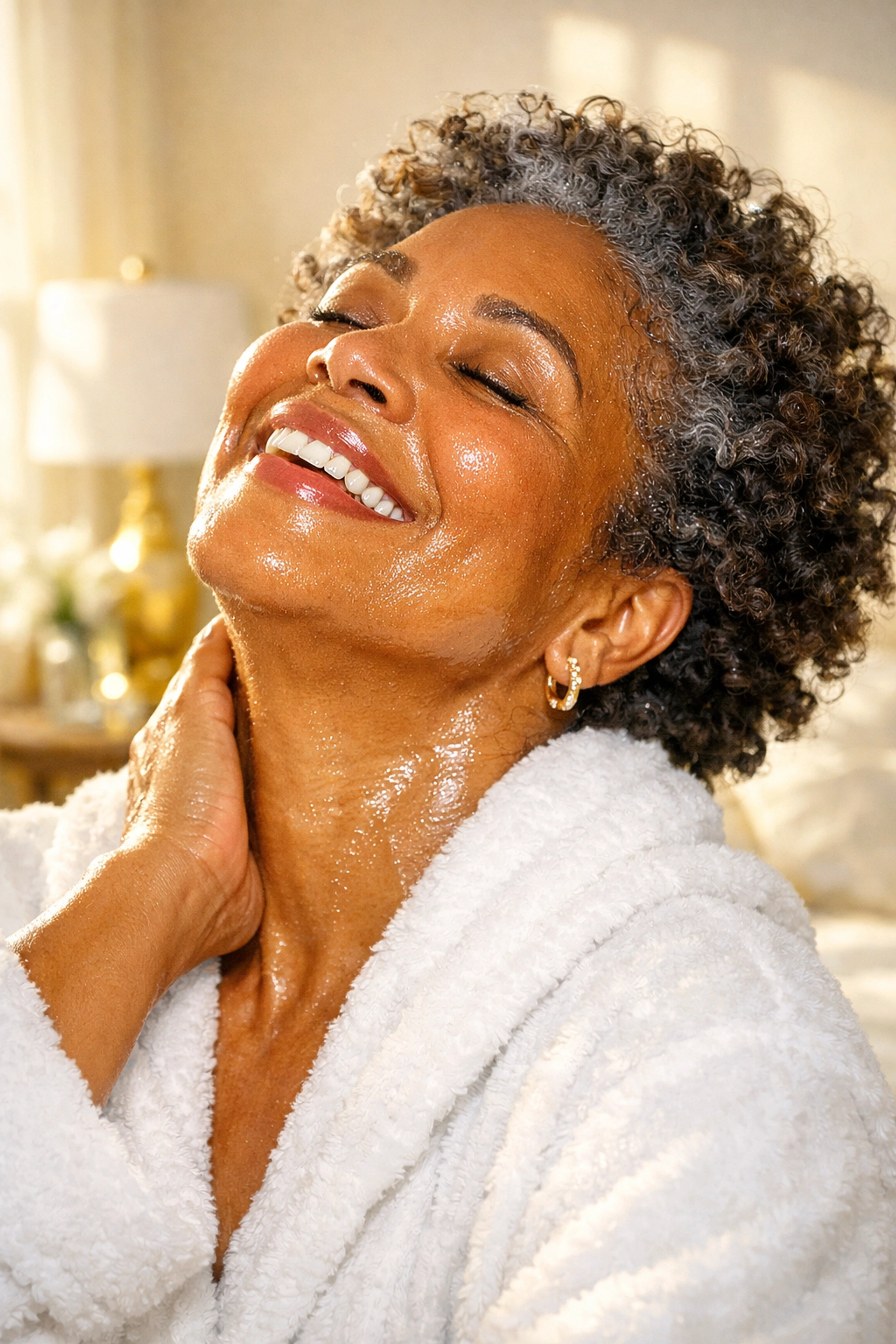
Every morning should begin with a ceremony of nourishment. Our Glow Booster+ Vitamin C & E Serum is widely considered the best hyperpigmentation treatment for dark skin because it doesn’t just sit on the surface; it builds your skin to its greatest potential.
Vitamin C is a powerful antioxidant that helps inhibit the enzyme responsible for melanin production. By incorporating this into your daily ritual, you’re not just treating existing spots: you’re shielding your skin against future ones. It’s like giving your face a vibrant, protective hug.
2. The Evening Ritual: Retinol for the Win
Nighttime is when the real transformation happens. This is your skin’s "4th quarter," and we’re here to take the win. Our Night Cap Retinol Cream is a soulful blend of science and luxury.
Retinol is a powerhouse for aging skin because it speeds up cellular turnover. For PIH, this means those pigmented cells are ushered off the stage faster, revealing the rejuvenated skin underneath. For Melasma, it helps break up those larger patches over time. Remember: consistency is the secret sauce. This isn't a race; it's a journey.
3. The Ultimate Guard: Sunscreen (No Excuses!)
If you aren't wearing sunscreen, you are essentially inviting PIH and Melasma to stay for dinner and never leave. The Skin Cancer Foundation emphasizes that UV rays are the primary trigger for darkening existing hyperpigmentation.
The struggle is real: many sunscreens leave us looking like we’ve been playing in flour. That’s why we created the Very Necessary Broad Spectrum SPF 40 Moisturizer. It is a sunscreen for dark skin no white cast guaranteed. It melts into your skin, providing a radiant finish while guarding your melanin against the sun’s rays.

Why Our Approach is Different
At IKNOW Skincare, we understand that pro-aging is about listening to the changing needs of your skin. We don't want to change who you are; we want to amplify your inherent glow.
Whether you’re dealing with the remnants of a breakout or the symmetrical patterns of melasma, your skincare should feel like a ritual, not a chore. It’s an act of self-care that says, "I see you, I love you, and I’m taking care of you."
Frequently Asked Questions
How long does it take to see results?
For PIH, you can often see a visible difference in 3 to 6 months with consistent use of our Glow Booster+ and Night Cap. Melasma is a marathon, not a sprint. It requires strict sun protection and a holistic approach to your wellness and hormones.
Can I use Retinol every night?
If you’re new to the "quest" for better skin, start slowly. Use Night Cap two or three times a week and listen to your skin. As it becomes more resilient, you can move to a nightly ceremony.
Is Vitamin C safe for dark skin?
Absolutely! In fact, it’s essential. It’s a myth that brightening products are "bleaching" products. A high-quality brightening serum for dark skin simply evens out the tone and brings back that natural radiance.
Final Thoughts: Embrace the Beauty of the Journey
Your skin has been with you through every laugh, every tear, and every sun-drenched memory. Dealing with dark spots is just a small part of the beautiful evolution of your face. By choosing products designed specifically for your needs: like those in our all-encompassing collection: you are honoring your skin’s history while protecting its future.
Stay radiant, stay resilient, and most importantly, stay "in the know."
Want to dive deeper into your skin’s specific needs? Take our RealAge Quiz to find the perfect ritual for your unique complexion.


